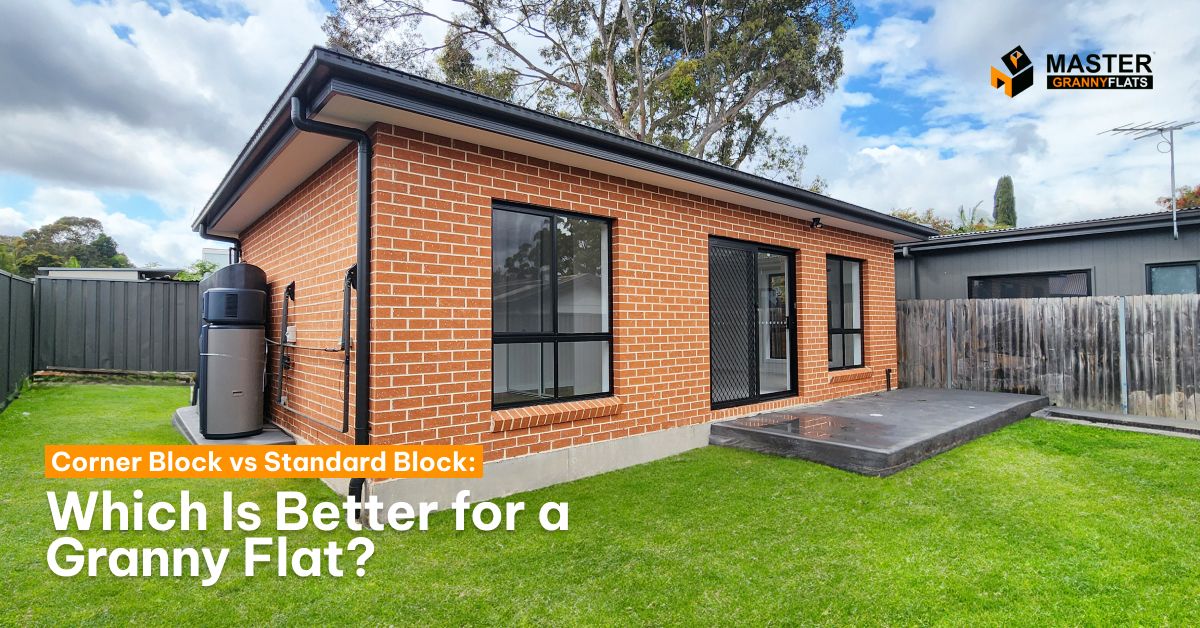
Corner Block vs Standard Block: The Direct Comparison
When choosing between a Corner Block and a Standard Block for your granny flat, the decision impacts your rental yield, privacy, and construction budget.
| Feature | Corner Block | Standard Block |
| Access | Dual street access (Separate entrances) | Shared driveway or side access |
| Privacy | High (Primary & Secondary street separation) | Moderate (Battle-axe or backyard style) |
| Council Rules | Stricter (Sight lines & secondary setbacks) | Standard (Standard SEPP setbacks) |
| Construction Cost | Higher (Extra fencing & connections) | Lower (Utilises existing infrastructure) |
| Resale Value | Premium (Often 10% higher) | Standard suburban value |
The Benefits of Building on a Corner Block
Building a corner block granny flat offers unique architectural advantages that standard blocks simply cannot match.
1. Dual Street Frontage and Total Independence
The main house faces the primary street, while the granny flat faces the secondary street. This creates a psychological and physical separation. Tenants feel they are living in a standalone house rather than a “backyard unit,” which significantly boosts rental demand.
2. Greater Design Flexibility
Custom granny flat builders can position the secondary dwelling to maximise north-facing sunlight without being blocked by the main house. You can also incorporate a separate private carport or garage directly off the second street.
3. Future Subdivision Potential
In many Australian councils, corner blocks are the first candidates for future subdivision. Building a granny flat that is already positioned correctly on a corner block makes a future “strata-title” split much easier.
The Unique Challenges of Corner Blocks
While the benefits are high, there are two “hidden” factors every homeowner must know:
- Secondary Street Setbacks: In NSW, while your primary setback might be 4.5m, your secondary street setback (the side of the corner) is typically 2m to 3m. This can restrict the width of your build.
- Sight Line Restrictions: Councils require “visibility splays.” You may be forbidden from building high fences or structures right on the corner to ensure drivers can see oncoming traffic. This can impact your privacy landscaping.
The Advantages of a Standard Block
Don’t dismiss the standard block, it remains the most popular choice for a reason.
- Cost-Effective Development: Because you are building behind the main house, you can often “piggyback” off existing sewer and water lines more easily than a corner block where services might be on the opposite side of the lot.
- Faster Approvals: Standard blocks rarely trigger “traffic safety” or “neighbourhood character” issues that can sometimes complicate corner block DAs (Development Applications).
- Integrated Living: For families building for a relative, the standard backyard placement keeps the family unit closer together while still maintaining 1.8m high-boundary privacy.
Investment Potential: Which Delivers Better ROI?
Corner Block Investment: According to Domain Property Research, corner block homes in Australia can sell for a premium of up to 10%. The ability to market a property with “two separate street addresses” is a massive drawcard for both renters and future buyers.
Standard Block Investment: This is a volume play. Lower entry costs and lower construction fees mean you reach “neutral cash flow” faster.
Final Thoughts: Which is Right for You?
If your goal is maximum rental income and long-term capital growth, the Corner Block is the winner. The independent access makes the granny flat a premium asset.
If your goal is affordability and a stress-free build, the Standard Block is your best bet.
At Master Granny Flats, we specialize in both. Our team can conduct a site-specific feasibility study to tell you exactly where your setbacks are and how to position your build for maximum privacy.
Ready to unlock your land’s potential?
Contact Master Granny Flats for a Site Assessment Browse Our Corner Block Floor Plans